Ordinarily, I like conkers. Having read some very interesting books about the origins of the Horse Chestnut Tree, I can’t fail to see each and every silky brown shiny nugget as a most precious treasure, to be prized and stroked and possibly even planted.
I must admit that the Horse Chestnut Tree is one of my favourites, and in May, when the British countryside is decorated with pink and white candles suspended from the foliage of hundreds of these leviathans, I think Old Mr Tradescant, gardener to the seventeenth century aristocracy, will be patting himself on the back up in Heaven, having nurtured just six seeds to give rise to them all.
The Four Little Seymours like conkers, too. They have yet to discover the delights of stringing them and turning them into nature’s nunchucks. I hope to put that discovery off for as long as possible; if they can injure each other with My Little Ponies, then vinegar-soaked conkers should surely be avoided.
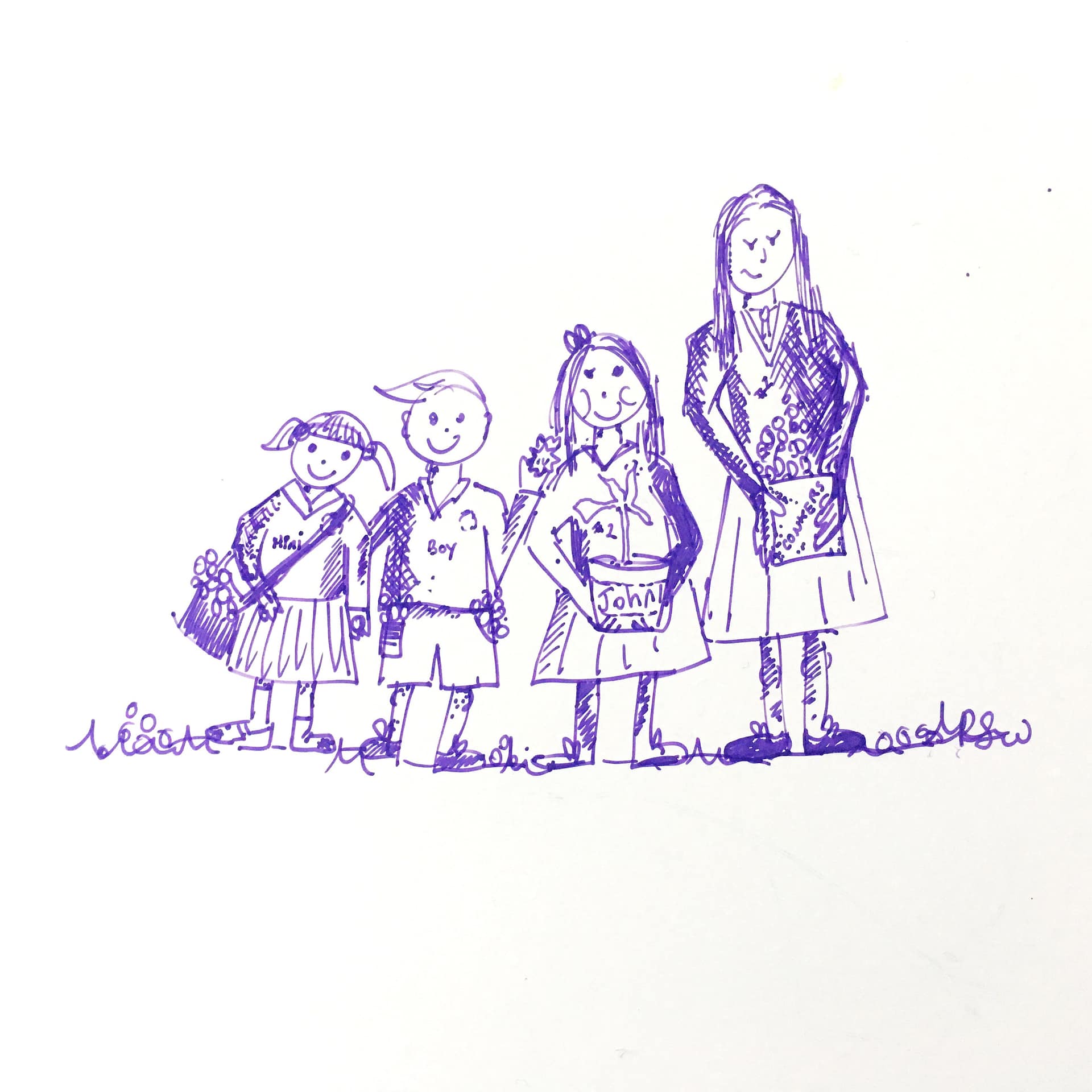
So far, the conker obsession involves simply gathering them. I watched Mini Seymour yesterday, one sock up, one sock down, meticulously scouring the playground floor after school, carefully stowing as many prized conkers as she could into her book bag. She carefully adjusted the bag at one point, to make it easier for her to pop them in as she worked. If she dropped one, she diligently retrieved it, so engrossed was she in her task.
Boy Seymour seems to like the ones with shells on. He appreciates the spiky, armoured coating they’re dressed in. They are weightier, and have a touch of barbarism that appeals to him. Once he’s unpeeled them, if he’s not lobbed them at one of his sisters, they’ll go into his pockets, and thence into the washing basket, and thence into the machine…
But this year, I am viewing conkers with a certain amount of trepidation.
All over our garden, I see the evidence of previous autumns. In tubs, in buckets, in the flower beds, there are little trees growing. Little Seymour Number Three is the proud owner of a potted one called John, which lives in the greenhouse. It has done well this year, and she’ll need to re-pot him soon.
There does come a point, usually rather quickly, when the appeal of the ubiquitous brown shinies fades. Their novelty value wears off – at least for me, and my enthusiasm for the conker vanishes for another year. After I have respectfully left them in book bags, in bedside stashes or even in pockets for a tolerable length of time, the conkers just have to go.
You can’t eat the bleedin’ things, so there’s nothing to be gained from putting them in a bowl. They’re not much use as fuel on the fire. And no, they don’t keep spiders away. Not in my house.
So they get flung outside.
This used to be easy. I’d open the door, and I’d chuck the conkers out. Whatever they’d been through at the hands of the Four Little Seymours, they’d then take their chances. Usually, they’d germinate. If they grew in the wrong place, we’d worry about that later. But when I saw one fall into the footings the other day, I realised that I’d have to be careful.
I don’t suppose that concrete is the ideal medium in which a Horse Chestnut Tree would thrive. But they haven’t colonised this country by being a pathetic, feeble species. If the seeds can survive thwacking, pickling, grating and boil-washing, then it may not be unreasonable to suspect that we might see one poking its way through my future luxury floor tiles in a few years to come.
That would not make Big Seymour very happy.
Luckily, it does seem that Little Seymour Number One is currently more interested in Instagram and YouTube than she is in conkers. So at least there will only be three conker collections to dispose of this year. But given the dedication of Mini Seymour to filling her book bag with nature’s inedible harvest, I’m convinced I’m going to miss a few.
SO, rather than throwing them out, I may have to think up an ingenious new use for the common-or-garden conker.
Maybe we could mash them to a pulp, and make some wall paper? Or press them – sliced – into screed, as a funky floor design?
Failing that, perhaps we should simply start a plantation, where, in two hundred year’s time, another family embarking on a building project on a budget will have ready access to some locally-grown timber, and can harvest their ceiling joists for free.
Even then, they’ll still be left with the sodding conkers.

0 Comments